
Vitamin E is also called tocopherol. It is also known for its antioxidant properties. Antioxidants help protect the body from harmful substances called free radicals. Free radicals can cause health problems such as heart disease and cancer. When the food consumed in the body is converted to energy, free radicals begin to form. Also, free radicals can originate from ultraviolet light and cigarette smoke.
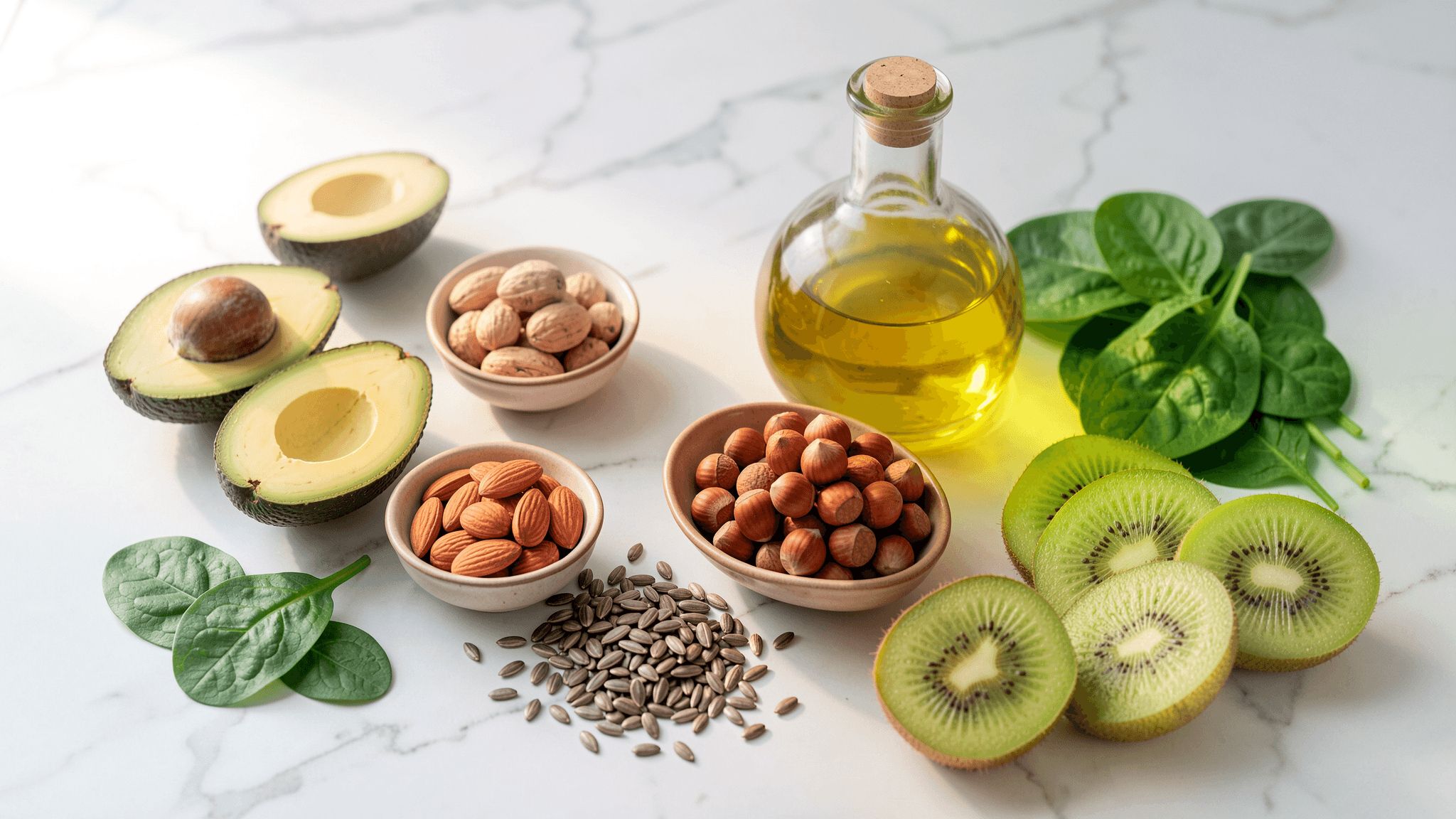
Vitamin E is also called tocopherol. It is also known for its antioxidant properties. Antioxidants help protect the body from harmful substances called free radicals. Free radicals can cause health problems such as heart disease and cancer. When the food consumed in the body is converted to energy, free radicals begin to form. Also, free radicals can originate from ultraviolet light and cigarette smoke. Tocopherol, which contains vitamin E; has four different forms: alpha-tocopherol, beta-tocopherol, delta-tocopherol, and gamma-tocopherol.
What is Vitamin E?
Vitamin E is known as one of the vitamins that stands out for its ability to dissolve in fat. Because it is fat-soluble, it is stored in fatty tissue and in the liver. Since it is a fat-soluble vitamin, it is not quickly excreted from the body. When the body needs vitamin E, due to its storage, it is available in the body in a ready-to-use form. Vitamins E is found in many natural foods. Therefore, you can get the vitamin E you need with a normal diet.
Vitamin E has various positive effects, especially on hair and nails, and is also quite effective on the skin. For this reason, it is commonly used in beauty products. It is an important vitamin in slowing down the effects of aging.
Vitamin E is a vitamin that helps promote hair growth, prevent breakage, and enhance shine and luster. Because it has antioxidant and anti-inflammatory properties, it is also effective for hair. It helps the body increase blood flow to the scalp. It also has moisturizing properties for the hair.
Vitamin E is one of the fat-soluble vitamins. It is stored for absorption when needed.
The recommended daily intake of Vitamin E according to age is as follows:
- From birth up to 6 months of age, the daily vitamin E needs of infants is 5 milligrams.
- From the 7th month until the 12th month of age, the daily vitamin E needs of infants is 6 milligrams.
- From 1 to 3 years of age, the daily vitamin E needs of babies and children is 7 milligrams.
- From 4 to 8 years of age, the daily vitamin E needs of children is 8 milligrams.
- From 9 to 13 years of age, the daily vitamin E needs of children is 12 milligrams.
- Adults over 14 years of age need 16 milligrams of vitamin E per day.
- Women who are breastfeeding have a daily vitamin E need of 19 milligrams. Since the body has the ability to store vitamin E, there is no need to consume vitamin E daily.
Where Is Vitamin E Found?
Vitamin E can be answered to the question "where is it found" as being in many naturally-produced foods. The foods containing vitamin E are as follows:
Avocado
Avocado is rich in vitamin E apart from B group vitamins, potassium, and magnesium. Avocado contains a concentrated amount of vitamin E. One avocado consumed can meet more than the daily vitamin E need.
Mango
It is a fruit rich in vitamin E. In addition, thanks to the many vitamins and minerals it contains, it also helps protect the body's immune system. At the same time, mango is a fruit that shows antioxidant properties.
Kivi
It is a fruit concentrated in vitamin E. When 100 grams of kiwi are consumed, the daily vitamin E need can be met.
Spinach
It is a vegetable consumed quite a lot in winter. Because it is a low-calorie food, it can be consumed easily.
Red Beet
It is possible to consume both the roots and the leaves of the red beet. The red beet is a vegetable rich in vitamin E.
Types of Dried Fruits and Nuts
Vitamin E can be found in dry nuts and seeds such as sunflower seeds, almonds, peanuts, hazelnuts, and nut butters. Consuming these types of dry nuts daily can meet the required Vitamin E intake.
Goose meat
Goose meat is quite delicious and nutritious. It contains many vitamins and minerals. Goose meat is a quite rich source of Vitamin E.
Fish Varieties
Fish products also contain high amounts of Vitamin E. They are also quite rich in omega-3 fatty acids. For the question "what contains Vitamin E" in seafood, the answer points to fish species like sterlet, sea bass, and salmon.
Broccoli
Broccoli is a nourishing food. It can also be easily consumed because it is low in calories. It contains many vitamins and minerals, including Vitamin E.
Plant oils
Plant oils such as wheat germ, sunflower, and rapeseed oil, together with olive oil, are important in terms of Vitamin E. Regularly using these products, which contain rich Vitamin E, is good for heart health and also meets the Vitamin E requirement.
Why is Vitamin E Important?
Vitamin E is an important type of vitamin that has many functions in the body. It contributes to the immune system, and can have positive effects on cell renewal and the skin. Vitamin E is well-known for its benefits to hair and skin. Vitamin E, which shows antioxidant properties, supports the body against free radicals that are effective in skin aging. Thus, by protecting the skin structure from aging-inducing effects, it can slow down the formation of aging signs.
Vitamin E has antioxidant properties that could benefit patients suffering from asthma. Antioxidants are substances that neutralize oxygen-containing molecules called free radicals, which cause long-term damage to cells.
It is thought that by reducing oxidative stress in the lungs, the airway hypersensitivity, which is the fundamental characteristic of asthma, can be reduced. However, taking high amounts of Vitamin E into the body can impair lung functions in people with allergic asthma and increase airway hypersensitivity. In addition, Vitamin E can be used in many skincare products. Vitamin E is quite important in regulating and the normal functioning of the immune system.
Vitamin E deficiency is rare in healthy people. However, Vitamin E deficiency can be common in people who have malabsorption disorders that lead to insufficient nutrition. The symptoms that appear due to Vitamin E deficiency are as follows;
- Retinopathy can cause problems related to eye health, such as damage to the retina of the eye and vision impairment.
- Peripheral neuropathy can cause weakness or pain as a result of nerve damage.
- Can cause muscle weakness known as myopathy.
- Ataxia; loss of coordination in the body can occur. In Vitamin E deficiency, this type of symptoms can occur.
Medical Information and Disclaimer
This content has been prepared in accordance with the current scientific literature and generally accepted medical knowledge at the time of its preparation, with the aim of informing the public on health matters. The information contained within is for general informational purposes and does not substitute for diagnosis, treatment, prescription, or personalized medical advice.
This content has been prepared in accordance with the current scientific literature and generally accepted medical knowledge at the time of its preparation, with the aim of informing the public on health matters. The information contained within is for general informational purposes and does not substitute for diagnosis, treatment, prescription, or personalized medical advice.
Since each individual's health status and treatment requirements are different, diagnosis and treatment decisions must be made by a physician as a result of the person's clinical evaluation, examination, and necessary tests. Since scientific knowledge and medical practices may change over time, the information included in the content can be updated. In addition, some medical branches, tests, and treatment facilities discussed in our health guide may not be included in the current service scope or staff of our hospital.
If you have any complaints or concerns regarding your health, you can schedule an appointment with our physicians in line with the medical branches and services offered by our hospital, or consult your nearest healthcare institution.

