
What is Lafora Disease? Lafora disease is a severe hereditary disorder belonging to the progressive myoclonic epilepsies. In this disease, epileptic seizures typically appear in late childhood or adolescence. Muscle twitching (myoclonus), difficulty walking, and dementia are among the other symptoms that can occur in this disorder. Individuals affected by Lafora disease experience a progressive decline in their cognitive functions...
Lafora Disease What is Lafora Disease?
Lafora disease is a severe hereditary disorder that falls within the progressive myoclonic epilepsies. In this disease, epileptic seizures typically appear in late childhood or adolescence. Muscle twitching (myoclonus), difficulty walking, and dementia are among the other symptoms that can occur in this disorder.
Individuals affected by Lafora disease experience a progressive decline in their cognitive functions. This decline typically parallels the onset period of the seizures. The main genes blamed for the disease's appearance are the EPM2A or NHLRC1 genes. Progressive myoclonic epilepsies describe a group of diseases whose course becomes increasingly worse over time and can follow a fatal course. Symptoms that appear during adolescence can result in speech difficulties developing in some individuals.
What Are the Symptoms of Lafora Disease?
Myoclonus is a term describing the sudden muscle contractions occurring in the muscles. This involuntary movement occurs in an uncontrollable and unstoppable manner. A muscle group can become affected by myoclonus, or many different muscles can be affected at the same time. The movements that occur can form in an orderly manner or randomly. The myoclonus symptoms can vary from moderate to severe levels. The twitching signs known as myoclonus can generally be summarized as follows:
- Unpredictable
- It has sudden onset
- Short-lived
- Uncontrollable
- The movement is made in a way similar to getting an electric shock
- Its density and frequency of occurrence are irregular
- It generally develops in one part of the body
- It negatively affects normal speech, eating, and movement functions.
For any disease, the time when symptoms appear noticeably is accepted as the first stage. This first stage develops differently for each disease and is used by physicians to diagnose the disease for the first time. For some diseases, the initial stage of the disease is within a single period or a specific age range. In Lafora disease, this period starts with the onset of adolescence and lasts until the transition to adulthood. This period, called the adolescent period, covers the age range of 12-18 and the first stage of Lafora disease shows itself within this age range.
The symptoms that occur in Lafora disease can vary from person to person. Seizure development is among the basic symptoms of this disease. During the course of the disease, seizure attacks occur as quite frequent events, resulting from problems arising from the physiology of the nervous system.
What Causes Lafora Disease?
Lafora disease is a hereditary neurodegenerative disease caused by autosomal recessive (recessive genes). For this disorder to occur, the affected individual must have copies of the recessive genes from both the mother and the father. Individuals who receive only one faulty gene from their parents do not develop the disorder; it usually follows an asymptomatic course.
The EPM2A gene, one of the genes considered responsible for the development of this disease, is located on the long arm of chromosome 6. On the short arm of the same chromosome, a genetic mutation called EPM2B (NHLRC1) can also display a triggering characteristic for the disease's development.
During the course of Lafora disease, myoclonic seizures that occur stem from abnormal electrical activity in the brain. Involuntary movements develop in the muscles triggered by this abnormal electrical activity. There are various factors that can affect the level of activation and can trigger the development of the complaints:
- Fatigue
- Alcohol use
- Fever
- Infection
- Light stimulation
- Stress
In young children, seizures are usually of the absences type. This type of seizures sometimes occurs unnoticed and can pass on its own. In myoclonic seizures, however, twitchings occur after seizures during the day.
How is the Diagnosis of Lafora Disease Made?
Various tests can be conducted to gain insight into why the myoclonus occurs. Following the physical examination and medical history collection, the tests applied can be summarized as follows:
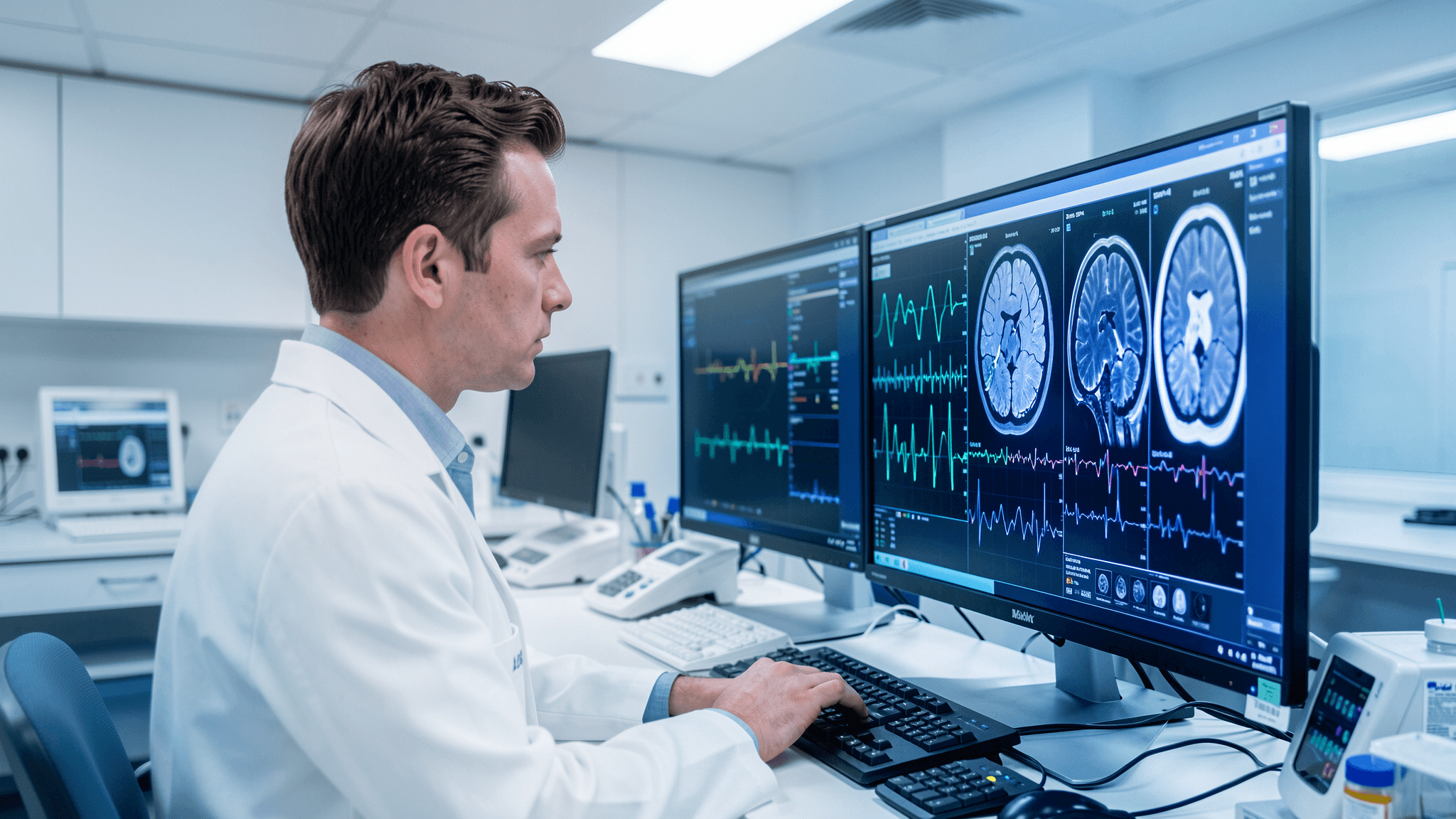
- Electroencephalography (EEG) enables the recording of electrical activity occurring in the brain.
- Electromyography (EMG) can be helpful in illuminating at what level the myoclonus develops by recording the electrical signals reaching the muscles.
- Magnetic resonance imaging (MRI) or computed tomography (CT) is effective in illuminating any structural problem or revealing existing tumor formations.
In addition to these tests, various biochemical analyses can also be performed using a blood sample from the individual.
A definitive diagnosis of Lafora disease can then be made after evaluating tissue samples taken from the muscle, liver, brain, or skin using histopathological staining methods. Therefore, to make a diagnosis, a biopsy must first be performed on any of these organs.
EEG examinations can provide information about the nature of the seizures occurring in the early stages of the disease. As the disease progresses, the graphics examinations can observe that the signals are asymmetric, irregular, and generalized. In the advanced stages of the disease, myoclonic muscle movements begin to occur almost continuously. In MRI examinations done for neurological imaging purposes, no change may be detected in the early stages of the disease, however, various studies indicate that the disease can be revealed with tests called positron emission tomography.
How is the Treatment of Lafora Disease Done?
Unfortunately, there is currently no treatment method available that can completely eliminate Lafora disease. The treatment planning of the disease is generally designed to support the patient. This planning essentially aims to control the seizures that occur and to increase the patient's functionality. Depending on the type of seizure that occurs, the control of the seizures in Lafora disease is carried out with antiepileptic drugs.
Carrying out this treatment plan, like in all other disorders, may vary depending on various factors:
- Patient's age
- Frequency of seizures
- Severity of seizures
- General health status
By evaluating these factors, the most appropriate antiepileptic drug for the patient is selected. It should not be forgotten that these drugs have various side effects. In this treatment method, which can cause serious side effects, regular follow-up is very important, and it should be borne in mind that applications such as frequent drug change or dosage adjustment can be resorted to when necessary.
In some individuals, making various lifestyle changes in addition to medication may at least help reduce the likelihood of seizures being triggered. These lifestyle changes include maintaining good sleep hygiene, avoiding exposure to flickering lights, managing stress levels, abstaining from alcohol, and following a regular and healthy diet.
In this disease with autosomal recessive character, an individual's siblings can be born with a 50% chance of being a carrier or a 25% chance of having the disease. For this reason, if individuals who have genetic disorders in their family want to have children, it is important for them to benefit from genetic counseling services.
Lafora disease is quite difficult period for both young individuals and their parents. In order for this period to be passed as best as possible, if you observe Lafora disease symptoms and signs in your child or around you, it is recommended that you apply to medical institutions and get support from specialist doctors. We wish you healthy days.
Medical Information and Disclaimer
This content has been prepared in accordance with the current scientific literature and generally accepted medical knowledge at the time of its preparation, with the aim of informing the public on health matters. The information contained within is for general informational purposes and does not substitute for diagnosis, treatment, prescription, or personalized medical advice.
This content has been prepared in accordance with the current scientific literature and generally accepted medical knowledge at the time of its preparation, with the aim of informing the public on health matters. The information contained within is for general informational purposes and does not substitute for diagnosis, treatment, prescription, or personalized medical advice.
Since each individual's health status and treatment requirements are different, diagnosis and treatment decisions must be made by a physician as a result of the person's clinical evaluation, examination, and necessary tests. Since scientific knowledge and medical practices may change over time, the information included in the content can be updated. In addition, some medical branches, tests, and treatment facilities discussed in our health guide may not be included in the current service scope or staff of our hospital.
If you have any complaints or concerns regarding your health, you can schedule an appointment with our physicians in line with the medical branches and services offered by our hospital, or consult your nearest healthcare institution.

